



If you own a home anywhere in the Edmonton area, your roof works harder than almost any other part of your house. Between deep prairie freezes, heavy snowfall, and the constant melt-and-refreeze that defines an Alberta winter, the season quietly grinds away at even a well-built roof. The frustrating part is that most winter roof damage in Edmonton happens where you can’t see it until a spring leak, a stained ceiling, or a surprise repair bill forces the issue.
Understanding how our winters attack a roof is the first step to protecting yours. Here’s what’s really going on above your head from October through April, and the warning signs every Edmonton, Sherwood Park, and Fort If you need a local crew after the snow melts, our Edmonton roofing services page shows how we help homeowners across the city.Saskatchewan homeowner should be watching for once the snow melts.
Why Edmonton Winters Are So Tough on Roofs
Edmonton doesn’t just get cold; it swings. In a single week we can drop below -30°C, then climb above freezing during a chinook or a sunny afternoon, then plunge again overnight. Roofs in milder climates never deal with this kind of repeated stress.
Add a winter that runs six months long, regular heavy snow, and dry prairie winds, and you have a combination that tests every layer of your roofing system: the shingles, the flashing, the sealant, the attic, and the structure underneath. Most roofs are built to handle it, but “built to handle it” and “will never need attention” are two very different things in this climate.
The Freeze-Thaw Cycle: Your Roof’s Biggest Enemy
If there’s one villain in the story of Edmonton winter roof damage, it’s the freeze-thaw cycle.
Here’s how it works. During the day, the sun and rising temperatures melt snow and ice on your roof. That meltwater trickles into tiny cracks and gaps around shingle edges, under flashing, into chimney mortar, along sealant lines. Then night falls, temperatures crash, and that trapped water freezes. Because water expands by roughly nine percent as it turns to ice, it pries those small openings a little wider every single time.
Repeat that cycle dozens of times over a winter and a hairline crack becomes a real gap. Sealant that was watertight in the fall starts to fail. Flashing loosens. Shingles lift. None of it looks dramatic in January, but it sets the stage for leaks the moment spring rain arrives.
Ice Dams and the Leaks They Cause
Ice dams are one of the most common and most misunderstood causes of winter roof leaks in older Edmonton and Sherwood Park homes.
They form when heat escaping from your living space warms the upper part of the roof and melts the snow sitting on it. That water runs down toward the eaves and gutters, which stay cold because they hang past the heated part of the house. There, the water refreezes into a ridge of ice that dams. As more meltwater backs up behind it, it has nowhere to go but sideways and up, seeping under your shingles and into the roof deck, attic, and ceilings below.
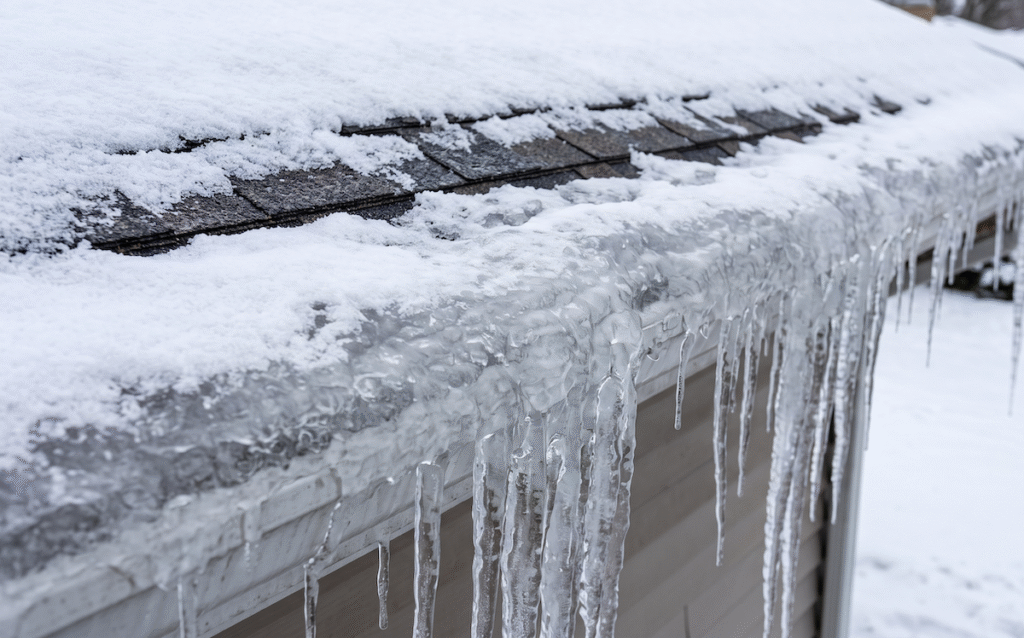
Those big, dramatic icicles hanging off your eaves? They’re often the first visible sign that an ice dam is forming. The root cause is usually an attic that’s losing too much heat or isn’t ventilated properly, which is why ice dams tend to show up on the same homes winter after winter until the underlying issue is addressed.
Snow Load and Structural Stress
A fresh snowfall looks light, but wet, packed snow is deceptively heavy, and Edmonton gets plenty of it. On steep-slope roofs, most of that snow eventually slides or blows off. But on flat and low-slope roofs (common on additions, garages, and some modern Edmonton-area homes), snow accumulates and lingers, adding real weight to the structure.
Drifting makes it worse. Wind can pile snow unevenly, concentrating the load in valleys or against walls and rooftop equipment. Over a long winter, that sustained weight stresses the roof structure and can accelerate sagging in areas that were already weakened by age or moisture.
Brittle Shingles and Wind Damage
Asphalt shingles are engineered to flex slightly with the seasons, but extreme cold makes them brittle. At -25°C and below, a shingle that would bend in summer can crack, split, or shed its protective granules instead. You’ll often see the evidence of granule buildup in gutters and at the base of downspouts after a hard winter.
Then there’s the wind. Alberta’s open prairie winds and winter storms can catch the edge of an already-loosened or brittle shingle and peel it back or tear it off entirely. Once even a few shingles are compromised, the layers beneath them are exposed to the next round of snow and meltwater.
Attic Condensation and Hidden Moisture
Not all winter roof damage comes from the outside. Warm, moist air from cooking, showers, and everyday living rises into the attic, and when it hits the cold underside of the roof deck, it can condense or even form frost. When that frost melts during a thaw, the moisture soaks into insulation and wood, creating the perfect conditions for rot and mould.
This is a slow, silent form of damage that many homeowners never notice until it’s advanced. Good attic insulation and ventilation are what keep it in check, which is why they matter just as much to your roof’s health as the shingles on top.
Warning Signs to Watch For After Winter
Once the snow melts, a few minutes of looking from the ground and inside your attic can catch problems while they’re still small and affordable to fix. Keep an eye out for:
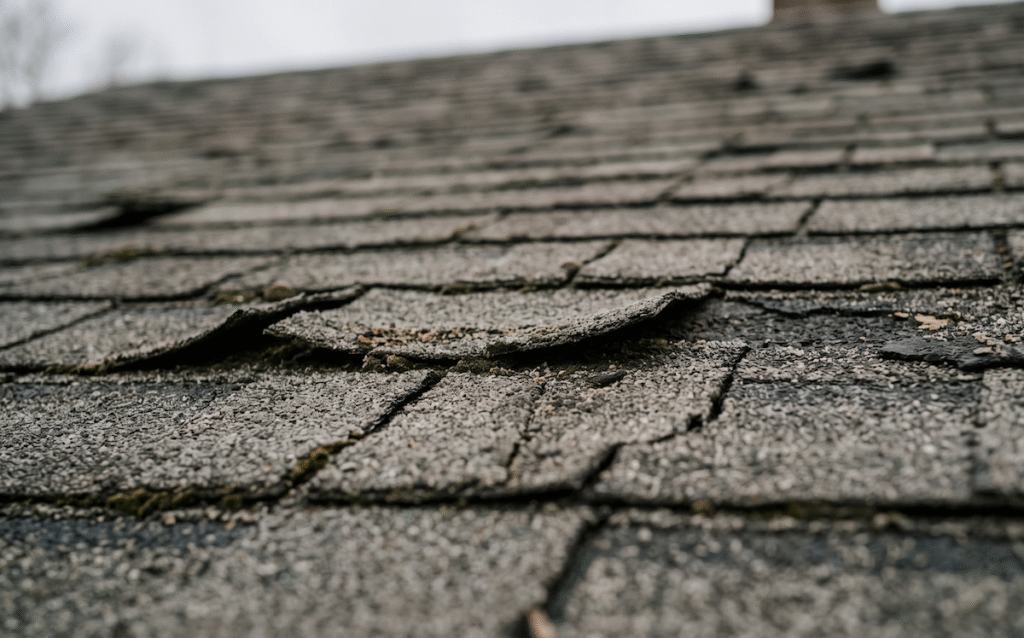
- Missing, cracked, curled, or buckled shingles, especially along edges and ridges
- Granules collecting in gutters, downspouts, or at the base of the house
- Water stains or discoloration on ceilings or upper walls
- Damp insulation, frost, or a musty smell in the attic
- Loose, bent, or lifted flashing around chimneys, vents, skylights, and valleys
- Sagging spots on the roof surface or the attic decking
- Damaged or pulled-away eavestroughs, often a leftover from heavy ice buildup
- Daylight visible through the roof boards from inside the attic
Any one of these on its own may be minor. Several together usually mean winter left its mark and that it’s worth having a professional take a closer look before spring rains and summer hail arrive.
Why a Post-Winter Roof Inspection Matters Here
In a climate like ours, spring is the smartest time to have your roof looked at. Winter’s damage is fresh and easiest to trace, and catching it early means a small repair instead of a major replacement or worse, water damage inside your home.
Homes across Edmonton, Sherwood Park, and Fort Saskatchewan share the same seasonal enemies. Still, every roof ages differently depending on its slope, materials, attic setup, and how many winters it’s already weathered. A trained eye can tell the difference between normal wear and a problem that’s about to become expensive.
Protect Your Roof With Scherger Roofing
At Scherger Roofing, we’re a family-owned, licensed, and insured team that has spent years learning exactly how Alberta winters treat local roofs and how to keep them protected. Whether you’ve spotted a warning sign above or want peace of mind after a long winter, we’re here to help.
Book your free roof inspection and estimate today. Call us at (780) 394-3404 or request a free estimate online. We proudly serve homeowners across Edmonton, Sherwood Park, Fort Saskatchewan, and Beaumont with 24-hour emergency repairs available for an additional fee when you need us most.
Your roof, our commitment.
FAQs
Q: How do Edmonton winters damage a roof?
A: The biggest culprit is the freeze-thaw cycle: snow melts by day and refreezes at night, and the expanding ice pries open cracks in shingles, flashing, and sealant. Add ice dams, heavy snow loads, cold-brittle shingles, and prairie winds, and a single Edmonton winter can quietly wear down even a solid roof.
Q: What is an ice dam, and why is it so common in Edmonton homes?
A: An ice dam is a ridge of ice that forms at your eaves when heat escaping the attic melts snow higher up, which then refreezes at the cold roof edge. Water backs up behind it and seeps under your shingles. It’s especially common on older Edmonton homes with under-insulated or poorly ventilated attics.
Q: When should I inspect my roof after an Edmonton winter?
A: Spring, as soon as the snow melts, is the ideal time. Winter damage is fresh and easy to trace, and catching it early lets you fix small issues before spring rains and summer hail make them worse.
Q: Do I need a professional to check for winter roof damage?
A: A ground-level and attic look is a smart start, but much winter damage cracked flashing, bruised shingles, hidden moisture isn’t visible to an untrained eye, and climbing an icy roof is dangerous. Scherger Roofing offers free inspections across Edmonton; call (780) 394-3404.