

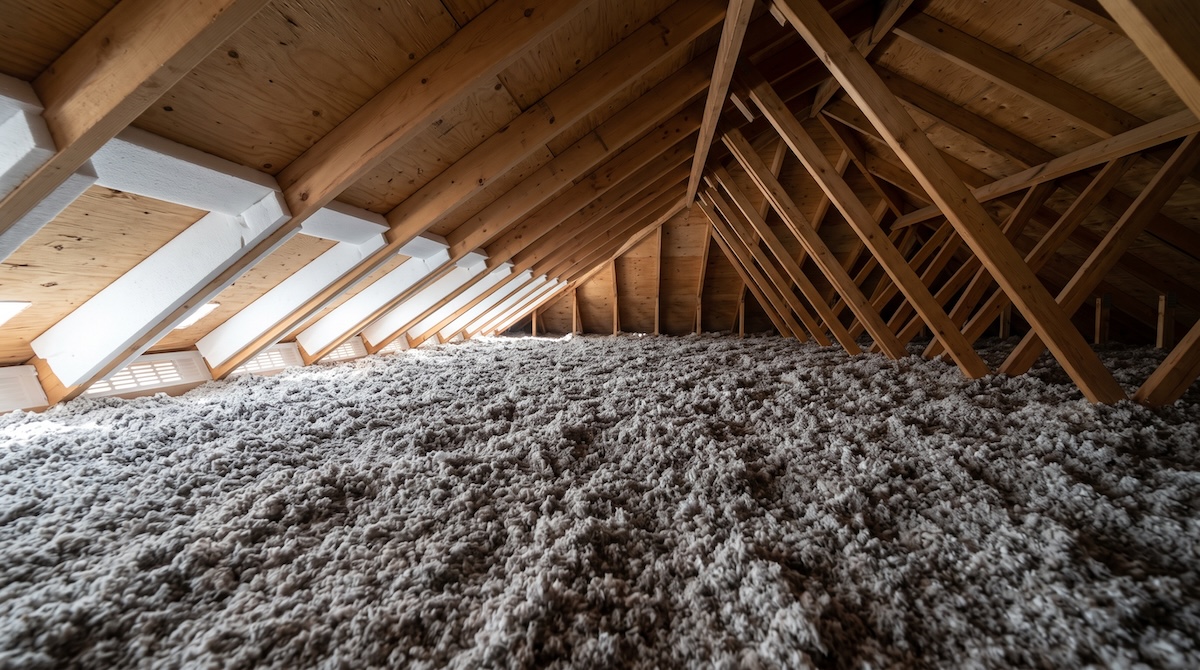
Roof problems do not always start on the outside. In Alberta homes, what happens beneath the roof deck can greatly affect winter ice, attic moisture, energy loss, and the long-term condition of roofing materials.
Attic insulation, air sealing, and roof ventilation form a connected system. When one part is weak, homeowners may see symptoms that look like a roofing failure even when the shingles are not the original cause.
Understanding that relationship is especially important in Edmonton and surrounding communities, where winter temperatures can create a large difference between warm indoor air and a freezing roof surface.
What Attic Insulation Actually Does
Insulation slows heat transfer between the conditioned living space and the attic. In winter, it helps keep indoor heat inside the home instead of warming the underside of the roof. In summer, it helps reduce heat transfer from the hot attic toward the rooms below.
Insulation works best when coverage is consistent. Thin areas, gaps, compressed insulation, and missing sections can create localized heat loss.
Why Heat Loss Matters to the Roof
When heat escapes into an attic during winter, it can warm parts of the roof deck. Snow on the roof may melt in those warmer areas and flow downward. At colder eaves, the meltwater can refreeze and contribute to an ice dam. Our guide on how Edmonton winters damage your roof explains the warning signs to watch for.
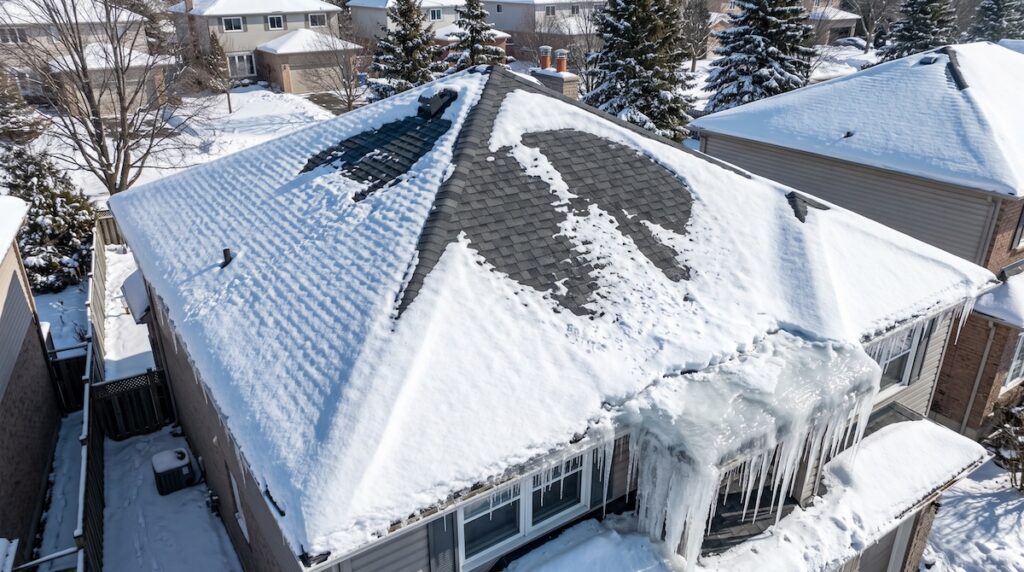
Once ice blocks normal drainage, additional meltwater can collect behind it and move beneath roofing materials. The result may be wet insulation, damaged decking, or interior staining.
Insulation is not the only factor in ice dams, but uneven heat loss is a common part of the problem.
Air Sealing Is Just as Important
Insulation slows heat movement, but it does not automatically stop air leakage. Warm indoor air can escape through ceiling penetrations around light fixtures, attic hatches, wiring, plumbing, wall top plates, and other gaps.
That air carries moisture. When it reaches cold attic surfaces, water vapour can condense or freeze. This is why adding more insulation without addressing major air leaks may not fully solve attic frost or moisture issues.
Roof Ventilation Completes the System
Ventilation helps remove heat and moisture that reach the attic. Intake vents near the eaves bring in outdoor air, while exhaust vents higher on the roof allow air to leave.
If insulation blocks soffit vents, the intended airflow path may be restricted. Baffles often keep insulation away from the underside of the roof near the eaves and preserve ventilation channels.
A well-performing attic therefore depends on insulation, air sealing, and ventilation working together.
Signs the Attic System May Need Attention
Recurring Ice Dams
Ice buildup at the eaves can indicate uneven roof temperatures. A roofing and attic inspection can help determine whether heat loss, ventilation, roof geometry, drainage, or other factors are contributing.
Frost on Roof Sheathing or Nails
Frost inside the attic strongly suggests moisture is reaching cold surfaces. When weather warms, the frost melts and may look like a roof leak even though the moisture originated inside the home.
Wet or Compressed Insulation
Insulation loses effectiveness when it becomes wet or heavily compressed. Moisture may come from roof leaks, condensation, plumbing, or exhaust ducts. Identify the source before replacing damaged insulation.
Uneven Snow Melt on the Roof
If snow consistently disappears from certain roof areas much faster than others, heat may be escaping unevenly. Sun exposure and roof geometry also affect melting, so this is a clue, not a diagnosis.
High Heating Costs or Cold Rooms
Energy problems can have many causes, but insufficient attic insulation and air leakage are common places to investigate in cold climates.
Bathroom Exhaust and Attic Moisture
Bathroom fans produce a concentrated stream of warm, humid air. If a fan duct terminates in the attic or becomes disconnected, that moisture can condense on cold framing and roof sheathing.
Kitchen exhaust and other ventilation ducts should also terminate outdoors through properly installed components. During a roof or attic inspection, visible duct problems can help explain moisture that might otherwise be mistaken for a roof leak.
What Happens During a Roof Replacement?
Roof replacement is an opportunity to inspect the decking and review ventilation details that are difficult to assess from the ground. If a homeowner has recurring attic frost or ice dams, they should discuss those symptoms before installing new roofing.
A new shingle layer will not correct poor insulation or indoor air leakage. Likewise, adding insulation will not repair damaged flashing or a leaking roof. Each problem needs the correct solution.
How Insulation Can Block Ventilation
One common issue occurs at the eaves, where insulation is pushed tightly into the narrow space between the attic floor and roof deck. This can cover soffit intake openings.
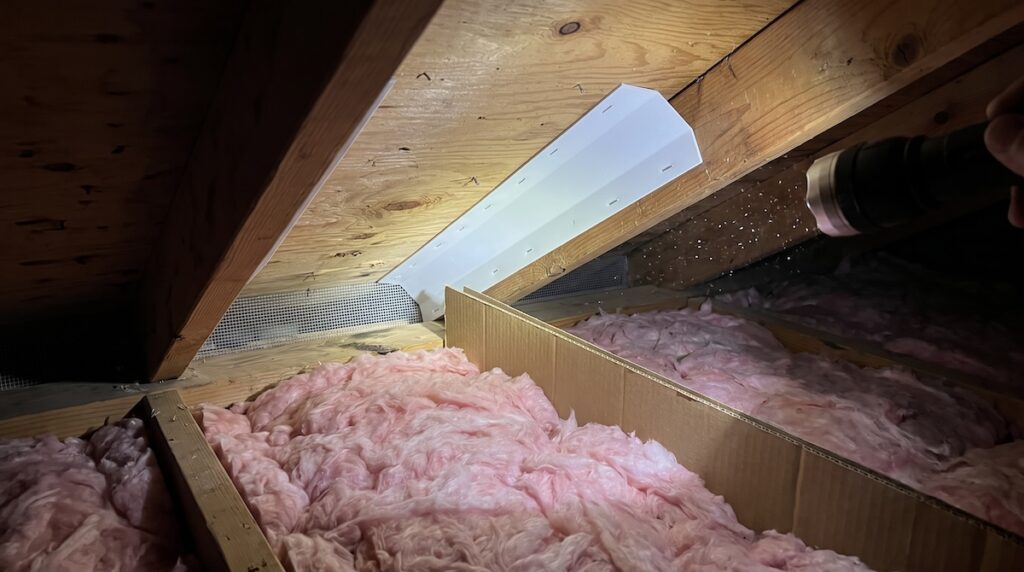
Properly installed ventilation baffles create a channel for air to move from the soffit into the attic while keeping insulation near the perimeter. If baffles are missing or displaced, airflow may be reduced.
Why a Whole-System Inspection Helps
When homeowners see water stains, frost, or ice, it is tempting to focus on one component. But several different problems can produce similar symptoms.
A roof leak may wet insulation. Condensation may imitate a roof leak. Poor insulation may contribute to ice dams. Blocked ventilation may worsen attic moisture. A disconnected fan duct may add humidity even when the roof is watertight.
A thorough inspection helps separate these causes so you spend money on the repair that actually addresses the problem.
Scherger Roofing’s Inspection Approach
Scherger Roofing’s published roof inspection checklist includes attic ventilation, moisture and dry rot, insulation condition, shingle wear, flashing, valleys, gutters, pipe boots, and other roof-system details. That broader view is useful when symptoms involve both the roof and attic.
The company serves Edmonton, Sherwood Park, Fort Saskatchewan, Beaumont, and surrounding communities with inspections, repairs, replacements, asphalt shingles, metal roofing, cedar, rubber roofing, commercial roofing, and emergency services.
Protect the Roof From the Inside Out
A durable roof depends on more than the material visible from the street. Managing heat and moisture below the roof deck can help prevent recurring winter problems and protect the structure supporting the roofing system.
If you are seeing attic frost, ice dams, wet insulation, or unexplained ceiling stains, contact Scherger Roofing at (780) 394-3404 or request a free estimate and inspection.
Frequently Asked Questions
Can poor attic insulation damage a roof?
It can contribute to conditions that affect the roof, including uneven snowmelt and ice dams. Insulation problems may also increase heat loss and interact with attic moisture issues.
Why is there frost in my attic?
Frost usually forms when warm, humid air reaches cold attic surfaces. Air leakage, inadequate ventilation, exhaust duct problems, and indoor humidity can all contribute.
Will new shingles fix ice dams?
Not necessarily. Roofing materials are only one part of the system. Recurring ice dams may require attention to insulation, air sealing, ventilation, drainage, and roof details.
Should insulation be checked before roof replacement?
If the home has attic moisture, ice dams, uneven snowmelt, or comfort problems, discuss attic conditions during the roofing assessment so related issues aren’t overlooked.